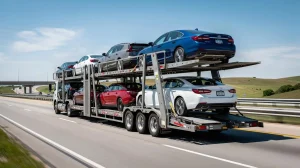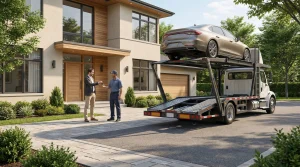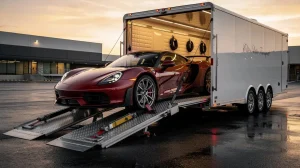

Enclosed car transport carries vehicles inside a covered trailer, helping protect them from direct exposure to weather and road debris. FleetRoute Auto Transport can discuss enclosed shipping options for eligible luxury, classic, collectible, and specialty vehicles.
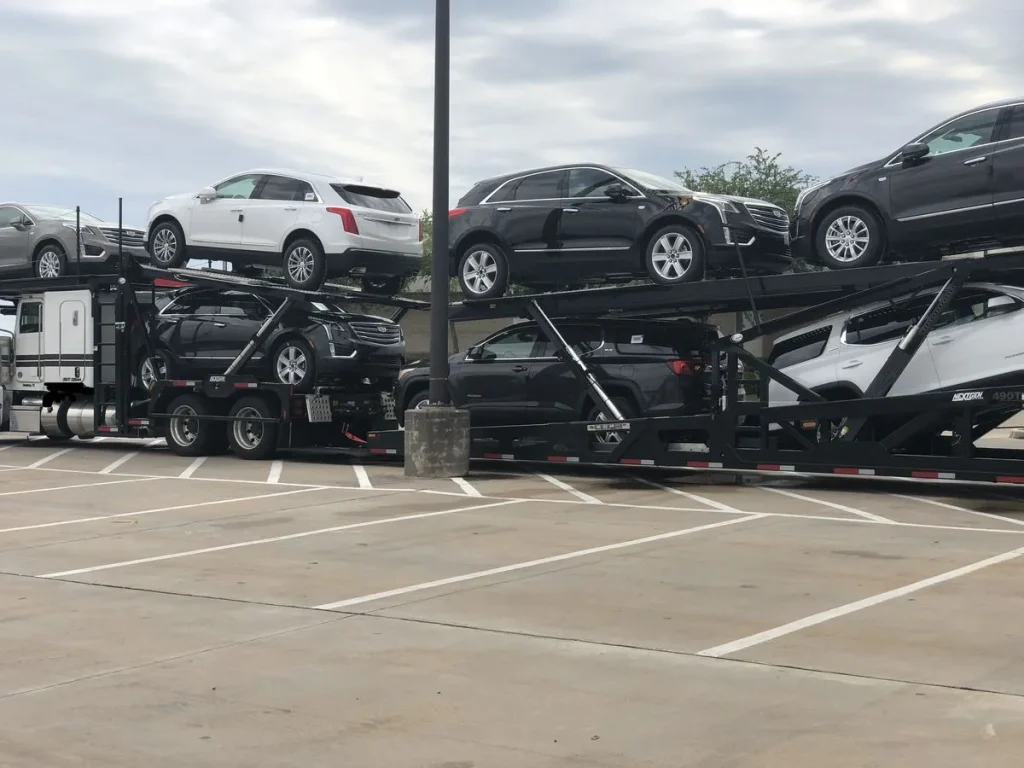
Some vehicles require more consideration when it is time to arrange transportation. A classic car, luxury automobile, restored collectible, or specialty vehicle may have a finish, value, or condition that makes additional protection from outdoor elements especially important.
FleetRoute Auto Transport offers enclosed car transport options for customers who want to explore covered vehicle shipping. Availability depends on the requested route, vehicle requirements, equipment, scheduling, and the transport arrangements that can be confirmed.
Enclosed car transport carries vehicles inside a covered trailer rather than on an open carrier. The enclosed environment helps shield the vehicle from direct exposure to rain, dust, and road debris during transit.
Although no transportation method eliminates every risk, enclosed transport can be an appropriate option for owners who prioritize additional environmental protection.
Enclosed car transport is a vehicle shipping method in which a vehicle is carried inside a trailer with protective walls and a roof. Trailer configurations and loading equipment vary according to the carrier and the shipment.
The covered design helps reduce direct exposure to outdoor conditions. This can be valuable when transporting vehicles with delicate finishes, restored surfaces, specialty components, or other features that owners want to protect from unnecessary environmental exposure.
Enclosed transport is available on some local, regional, and interstate routes, but not every route or pickup date will have the same carrier availability.
An enclosed trailer provides a physical barrier between the vehicle and many external conditions encountered on the road. This can help limit direct exposure to rain, dust, and road debris.
The protection offered depends on the trailer, loading method, handling procedures, and other shipment conditions.
Classic cars and collector vehicles can have finishes or parts that are difficult or expensive to restore. Owners may prefer enclosed transport when preserving the vehicle’s condition is a major priority.
Discuss restoration details, ground clearance, and any special handling requirements before the shipment is arranged.
Owners of luxury vehicles, performance cars, and specialty automobiles may appreciate the additional environmental protection of a covered trailer.
Certain vehicles may require special loading equipment because of low ground clearance, non-standard dimensions, or modifications. Sharing these details early can help determine whether an available carrier can accommodate the vehicle.
Enclosed transportation may involve different equipment, capacity, scheduling, and costs compared with open transport. Customers should consider these factors alongside their vehicle’s value, condition, and protection requirements.
Enclosed transport may be worth considering if you own a classic car, collectible automobile, luxury vehicle, performance car, restored vehicle, or another specialty model.
It may also suit customers who place a high priority on limiting direct exposure to outdoor conditions while their vehicle is being transported.
For many standard daily drivers, open transport may be a practical alternative. The right choice depends on the vehicle, route, budget, and level of protection you prefer.
When requesting a quote, provide the vehicle’s year, make, model, dimensions if available, condition, and pickup and delivery locations. Mention modifications, low clearance, unusual loading needs, or any concerns about the vehicle’s finish.
Enclosed transport capacity may be more limited than open transport on certain routes. Ask about scheduling, the expected pickup window, equipment requirements, and the arrangements available for your vehicle.
Review the total price, payment terms, insurance information, cancellation rules, and expected timing. Ask which carrier is responsible for the shipment and request written details about applicable coverage.
Photograph the vehicle’s condition and record any existing damage. Remove personal belongings, secure loose components, and follow the carrier’s instructions about fuel, battery condition, keys, and vehicle accessibility.
Be available at pickup or designate an authorized representative. Review the vehicle condition report and retain the documentation.
At delivery, compare the vehicle with the pickup photographs and condition report. Document any apparent issues promptly and follow the carrier’s written claims process.
Enclosed transport often costs more than open transport because covered equipment, available capacity, and operating arrangements differ.
The price for a particular shipment may depend on distance, route demand, vehicle size, ground clearance, pickup flexibility, requested dates, and carrier availability.
A collectible car requiring special loading equipment may have different requirements from a standard vehicle. Ask for a quote that accounts for your specific situation rather than assuming all enclosed shipments cost the same.
Before confirming your shipment, ask for details about the responsible carrier, insurance arrangements, coverage limits, applicable exclusions, and the process for reporting damage.
Do not assume that enclosed transport means every possible loss is covered. Review the written terms and policy information and document the vehicle’s condition before loading.
Maintaining photographs, inspection reports, booking confirmations, and relevant communications can help keep the shipment records organized.
FleetRoute Auto Transport serves customers contacting the business from Oakland and those exploring vehicle shipping to other available locations.
Share your pickup and destination addresses, vehicle details, and preferred dates to determine whether enclosed transport can be arranged for your route.
If the pickup location has limited access, discuss suitable loading arrangements in advance.
What is the main difference between open and enclosed transport?
Open transport carries vehicles on an exposed trailer, while enclosed transport carries them inside a covered trailer.
Is enclosed transport suitable for classic cars?
It can be a suitable option for classic vehicles when additional protection from outdoor elements is important, subject to carrier requirements.
Does enclosed transport eliminate all risks?
No. It reduces direct exposure to many environmental elements but does not eliminate every transportation risk.
Is enclosed shipping more expensive?
It often costs more than open transport, although the actual price depends on the vehicle, route, and shipment details.
If your vehicle needs additional protection during shipping, contact FleetRoute Auto Transport to discuss available enclosed transportation options.
Call (510) 322-2935 with your vehicle information, route, and preferred schedule. Our team can help you understand the factors to consider when arranging a covered vehicle shipment.
Plan carefully, review your booking terms, and choose a transport option that matches your vehicle’s needs.
Find answers to some common questions about car shipping and vehicle transportation.
The cost depends on the pickup and delivery locations, vehicle size, transport method, route demand, preferred dates, and carrier availability. Contact FleetRoute Auto Transport for a quote based on your specific shipment.
Open transport carries vehicles on an exposed trailer and is commonly used for standard cars. Enclosed transport carries vehicles inside a covered trailer, helping protect them from direct exposure to weather and road debris.
Door-to-door transport may allow pickup and delivery near your requested addresses. Exact locations depend on safe truck access, road restrictions, parking conditions, and carrier availability.
Transportation time depends on distance, route, scheduling, traffic, weather, and other operational factors. Your provider can discuss an estimated pickup and delivery window for your shipment.
Clean your vehicle when practical, photograph its condition, remove personal belongings and valuables, secure loose accessories, and disclose mechanical issues or modifications. Follow the carrier's specific preparation instructions.